Automotive parts manufacturing is a highly sophisticated and intricate process that combines cutting-edge technology with precision engineering. Each component, from engine blocks to brake pads, is meticulously crafted to meet stringent safety, performance, and durability standards. This article provides an in-depth look at the various stages involved in the creation of automotive parts, shedding light on the blend of traditional and modern manufacturing techniques that transform raw materials into functional and reliable components.
- Raw Material Selection and Preparation
The first step in the production of automotive parts is selecting the right raw materials. Steel, aluminum, plastics, rubber, and composites are common choices, each with unique properties that suit specific applications. Metals are sourced from mines or recycled materials and processed into sheets, bars, or castings. Plastics and rubbers are derived from petrochemicals and formulated to meet exacting specifications for flexibility, strength, or heat resistance.
- Forming and Casting Processes
Metal Parts
Stamping: Flat metal sheets are formed into complex shapes using stamping presses. Dies are carefully designed to cut, bend, and shape the sheet metal into body panels, chassis components, or engine parts.
Forging: Metal alloys are heated and then shaped under high pressure to create strong, dense parts like crankshafts, connecting rods, or suspension components.
Casting: Molten metal is poured into molds to create parts like engine blocks, transmission cases, and suspension arms. Castings can be done through sand casting, die casting, or investment casting methods.
Plastic Parts
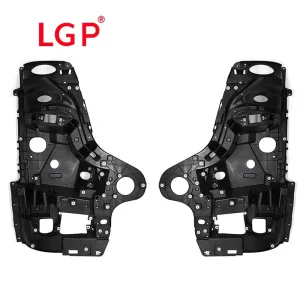
Injection Molding: Plastic pellets are melted and injected into a mold cavity under high pressure. Once cooled and solidified, the part is ejected from the mold, forming items like bumpers, dashboards, or interior trim pieces.
Blow Molding: Used mainly for hollow parts like fuel tanks and intake manifolds, plastic resin is melted, extruded into a parison, then blown into a mold with compressed air.
- Machining and Finishing
After forming or casting, many parts require machining to achieve precise tolerances and surface finishes. CNC (Computer Numerical Control) machines remove excess material from the part’s surface to ensure accuracy and conformity to blueprint specifications. Polishing, coating, or painting operations follow to improve appearance and corrosion resistance.
- Assembly and Joining Techniques
Once individual parts are manufactured, they must be assembled. This can involve welding (such as spot welding for joining steel body panels), brazing or soldering for heat exchangers, or adhesive bonding for lightweight materials. Fasteners like screws, bolts, and rivets are commonly used to secure parts together.
- Quality Control and Testing
Quality control is integral throughout the entire manufacturing process. Parts undergo rigorous testing for dimensional accuracy, strength, durability, and functionality. Non-destructive testing methods like X-ray inspection, ultrasonic testing, and computerized tomography (CT scanning) help identify defects. Endurance tests simulate real-world conditions to ensure parts perform reliably over time.
- Electronics and Wiring Harnesses
As cars become increasingly technologically advanced, the manufacture of electronics and wiring harnesses becomes equally vital. Components like ECUs, sensors, and infotainment systems are assembled on printed circuit boards. Wiring harnesses, which route electrical signals throughout the vehicle, are carefully designed, cut, terminated, and tested for proper connectivity.

- Sustainable Practices
Many automotive manufacturers are adopting eco-friendly practices in part production, such as using recycled materials, minimizing waste, and implementing energy-efficient manufacturing processes. Lean manufacturing principles also strive to reduce unnecessary steps, further streamlining the production line.
In conclusion, the manufacturing of automotive parts is a multifaceted process involving diverse materials, technologies, and disciplines. From raw material extraction to final assembly, each stage is executed with precision to ensure the production of high-quality, safe, and efficient components that contribute to the seamless functioning of the modern automobile.