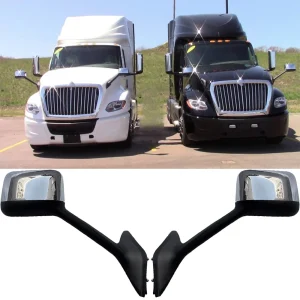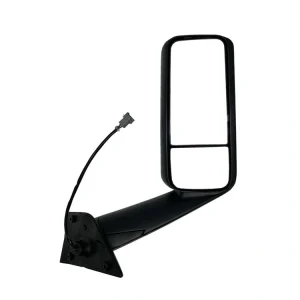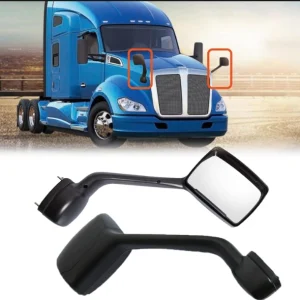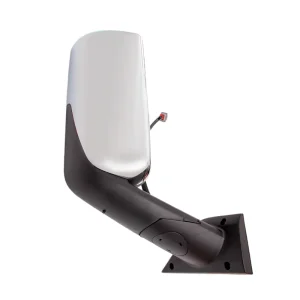
Truck mirrors are a critical component in ensuring safe operation for drivers navigating large vehicles on roads and highways. These mirrors extend the driver’s field of vision, helping to compensate for the substantial blind spots inherent to trucks and tractor-trailers. Understanding the importance, types, regulations, and maintenance of truck mirrors is vital for all commercial drivers and fleet managers. Here’s a comprehensive guide covering everything you need to know about truck mirrors.
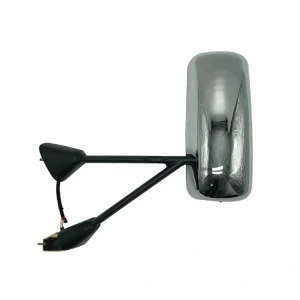
Importance of Proper Mirroring
1. Reducing Blind Spots: Large commercial vehicles have significant blind spots, or “no zones,” particularly along the sides and directly behind the vehicle. Adequate mirrors are essential to minimize these blind spots and prevent accidents.
2. Enhanced Visibility: Mirrors provide a view of surrounding traffic, pedestrians, and obstacles, allowing the driver to make informed decisions and maneuvers.
3. Compliance with Regulations: Many jurisdictions mandate specific mirror configurations for commercial vehicles to ensure safety on the roads.
Types of Truck Mirrors
1. Convex/ Wide-Angle Mirrors: These mirrors are curved outward, providing a wider field of view than flat mirrors. They are typically used on the passenger side and sometimes as additional lower mirrors to cover the sides and rear of trailers.
2. Flat Mirrors: Offering a more accurate distance perception, flat mirrors are usually installed on the driver’s side. They complement convex mirrors by providing a direct view behind the truck.
3. Crossover Mirrors: Positioned lower on the truck, crossover mirrors provide a view underneath and behind the trailer, especially useful when backing up or changing lanes.
4. Spot Mirrors: Small, round mirrors sometimes added to the main mirrors to cover extremely tight blind spots or monitor specific areas around the vehicle.
5. Camera Systems: While not traditional mirrors, camera systems are increasingly being integrated into trucks to augment visibility, offering live video feeds of the vehicle’s surroundings.

Regulatory Requirements
In the United States, the Federal Motor Carrier Safety Administration (FMCSA) sets standards for commercial vehicle mirrors under Title 49 of the Code of Federal Regulations. Key requirements include:
1. Presence: All commercial motor vehicles must be equipped with mirrors that provide the driver a view of the road behind and alongside the vehicle.
2. Field of View: Mirrors must enable the driver to see a certain distance behind the vehicle and along the sides, depending on the vehicle’s design.
3. Adjustability: Mirrors must be adjustable from the driver’s seat to accommodate different drivers and driving conditions.
Maintenance and Best Practices
1. Regular Inspection: Inspect mirrors before every trip for cracks, distortions, or misalignments. Promptly replace or repair damaged mirrors.
2. Cleaning: Keep mirrors clean and free of debris, snow, or ice to ensure maximum visibility.
3. Adjustment: Adjust mirrors according to the driver’s seating position and the vehicle’s load. Recheck after any changes in cargo or driver.
4. Use of Mirrors: Train drivers to use all mirrors systematically, scanning frequently, and combining mirror checks with physical head turns to check blind spots.
5. Technology Integration: Consider supplementary technologies like blind-spot detection systems or backup cameras to enhance safety further.

Conclusion
Truck mirrors play a pivotal role in ensuring road safety for commercial drivers, pedestrians, and other motorists. Understanding their types, adhering to regulatory requirements, and maintaining them properly is not only a legal obligation but also a moral imperative for promoting a safer driving environment. Through a combination of proper mirror use, regular maintenance, and embracing technological advancements, the risks associated with operating large commercial vehicles can be significantly mitigated.