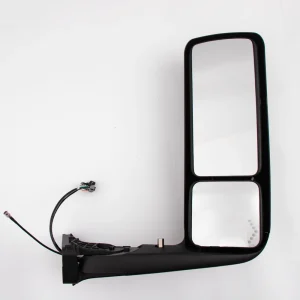
Truck mirrors are more than just aesthetic accessories; they are critical safety components that play a vital role in ensuring safe navigation for commercial vehicles. Given the size and blind spots inherent to large trucks, properly functioning mirrors are paramount to preventing accidents and ensuring that drivers maintain complete visibility of their surroundings. This comprehensive guide explores the importance of truck mirrors, the different types available, relevant regulations, and essential maintenance tips.

Importance of Truck Mirrors in Road Safety
Truck mirrors are the primary visual aids for drivers to see areas that are otherwise obstructed due to the vehicle’s size and shape. They enable drivers to monitor adjacent lanes, check for pedestrians, cyclists, and smaller vehicles, and oversee trailer loads. Without adequate mirror coverage, the risk of lane-change collisions, rear-end incidents, and other accidents dramatically increases.
Types of Truck Mirrors
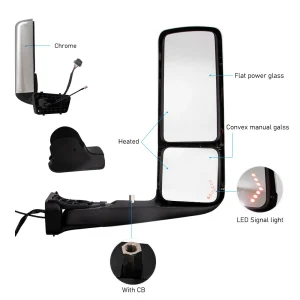
1. Convex Mirrors: Also known as wide-angle mirrors, these provide a broader view of the surrounding area. Convex mirrors give a distorted yet wider image, allowing drivers to spot approaching vehicles from a distance.
2. Flat or Plane Mirrors: These mirrors reflect images without distortion but provide a narrower field of vision. They are commonly used as the main driver-side mirror.
3. Cross-View Mirrors: Positioned on the front pillars or A-pillars, these mirrors provide a view of the front corners of the truck, helping drivers see pedestrians and objects close to the front bumper during turns.
4. Spot Mirrors: Smaller and adjustable, these are often added to existing mirrors to fill in blind spots or enhance visibility in specific areas.
5. Fender-Mounted Mirrors: These extend the field of vision further for trucks with large trailers or in situations where standard side mirrors cannot provide enough coverage.
6. Telescopic and Extendable Mirrors: Designed for adjustability, these mirrors can be extended or retracted to accommodate different loads or driving conditions.
Regulatory Requirements
In most countries, regulations governing commercial vehicle mirrors are stringent and mandate minimum standards for visibility and mirror placement. In the United States, for example, the Federal Motor Carrier Safety Administration (FMCSA) specifies that all commercial vehicles must have the following:
At least two flat mirrors that show the highway for a distance of at least 200 feet to the rear.
One convex mirror or a combination of flat and convex mirrors on the passenger side that eliminates blind spots.
Additional mirrors or other devices to provide the driver with a clear view to the rear in all loading conditions.
European Union regulations also specify similar requirements for Class C and D commercial vehicles. Local laws may vary, so it’s crucial for truck operators to stay updated on national and regional guidelines.
Maintenance and Replacement
Proper maintenance of truck mirrors is essential for maintaining optimal visibility and safety:
1. Cleaning and Adjusting: Regularly clean mirrors to remove dirt, grime, and glare-causing residue. Ensure mirrors are correctly adjusted to provide the widest possible view without creating blind spots.
2. Inspection: Check mirrors for cracks, chips, loose mounting, or signs of rust. Replace damaged mirrors immediately to avoid safety hazards.
3. Heated Mirrors: In colder climates, consider heated mirrors that defrost quickly and ensure clear visibility in inclement weather.
4. Automatic Tilt or Power Adjustment: Some modern trucks feature automatic or power-adjustable mirrors that can be programmed to different settings for various driving scenarios.

5. LED Lighting: Illuminated or LED-lit mirrors improve visibility at night and in low-light conditions.
6. Anti-Vibration Features: Anti-vibration technology minimizes image shaking and improves clarity, especially on rough roads.
In conclusion, truck mirrors are a fundamental aspect of commercial vehicle safety. Choosing the right type of mirror, adhering to regulatory standards, and implementing a rigorous maintenance schedule are all part of ensuring that truck drivers have the visibility they need to safely operate their vehicles on public roads. By staying informed and proactive about truck mirror care, fleet managers and drivers can minimize risks and promote a safer driving environment for all road users.