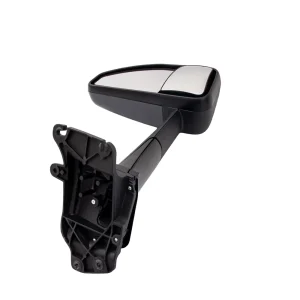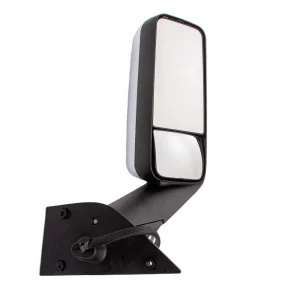
Extended mirrors, also known as convex or wide-angle mirrors, are a crucial safety feature installed on large vehicles, particularly trucks and buses. Their purpose goes beyond mere convenience; they play a vital role in enhancing visibility, improving safety for both the driver and others sharing the road. Here are several reasons why trucks require extended mirrors:

1. Increased Field of Vision
Large commercial trucks have significant blind spots, often referred to as “no-zones,” which can obstruct the driver’s view of adjacent lanes, the area directly behind the trailer, and even areas close to the truck’s sides. Extended mirrors, due to their convex shape and positioning, expand the field of vision, enabling the driver to see more of these blind spots. This enhanced visibility is critical for safe lane changes, merging, and detecting nearby vehicles, pedestrians, or cyclists.
2. Size and Proportion of Vehicles
Trucks, especially semi-trailers and heavy-duty haulers, can be up to 70 feet long or more, significantly larger than passenger vehicles. This size disparity creates a greater distance between the driver and the rear of the vehicle, making it impossible to rely solely on traditional side mirrors for adequate rear visibility. Extended mirrors compensate for this distance, ensuring that drivers can monitor their surroundings effectively despite the truck’s length and width.

3. Meeting Regulatory Requirements
Many countries have regulations mandating the use of extended mirrors on commercial vehicles to improve road safety. For example, in the United States, the Federal Motor Carrier Safety Administration (FMCSA) has standards dictating mirror sizes and placements to minimize blind spots. Compliance with these regulations ensures that trucks operate legally and safely on public roads.
4. Backing Up and Parking Maneuvers
Backing up a large truck or maneuvering in tight spaces can be extremely challenging without proper visibility. Extended mirrors, especially those that can be manually adjusted to focus on the rear, significantly aid in these maneuvers by providing the driver with a view of potential obstacles or hazards behind the vehicle. This is particularly important in busy loading docks, parking lots, or urban environments where space is limited.
5. Preventing Accidents and Enhancing Road Safety
The primary reason for using extended mirrors is to prevent accidents. Blind spot-related collisions can lead to severe injuries, fatalities, and property damage. By minimizing these blind spots, extended mirrors reduce the risk of side-swipe accidents, rear-end collisions with vehicles in the truck’s path, and incidents involving pedestrians or cyclists who might otherwise be unseen. Improved visibility translates directly into a safer driving environment for all road users.
6. Adaptability to Different Loads and Trailers
Commercial trucks often tow different trailers or carry varying loads that can alter their dimensions and blind spots. Adjustable extended mirrors allow drivers to adapt their mirrors according to the current configuration, ensuring optimal visibility regardless of the load being carried. This adjustability is crucial for maintaining safety standards across different driving scenarios.
Conclusion
In summary, extended mirrors are indispensable for trucks due to the unique challenges posed by their size, the complexity of their operations, and the need to adhere to safety regulations. They significantly enhance the driver’s situational awareness, reduce blind spots, and ultimately contribute to a safer driving experience for everyone on the road. By providing a wider and deeper view of the surroundings, these mirrors are a critical component in the ongoing effort to minimize accidents and promote responsible commercial vehicle operation.